
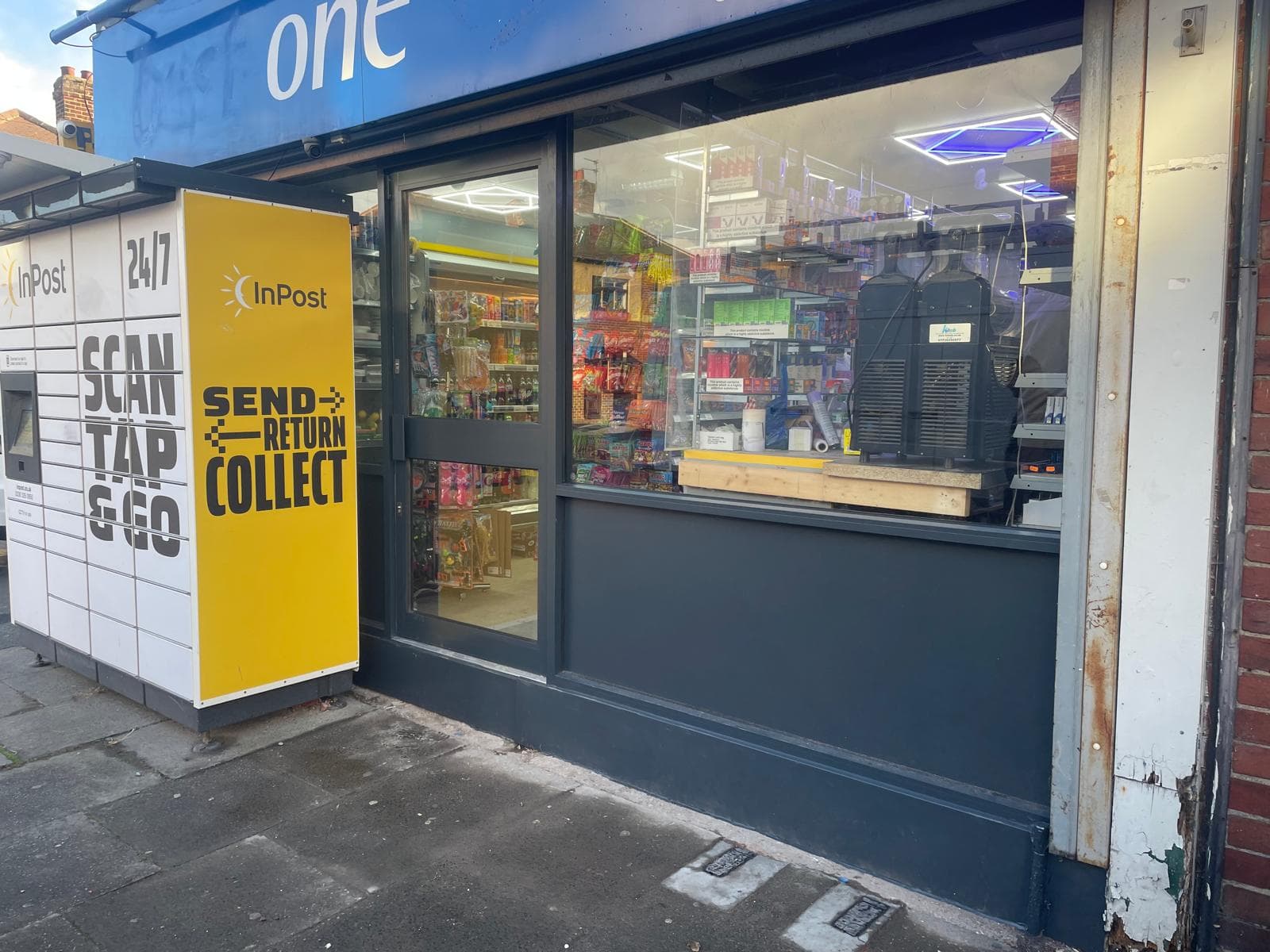
Aluminium Shopfronts
Bespoke aluminium shopfront systems engineered for durability and kerb appeal. Thermally broken frames, toughened glazing, and powder-coat finishes to your specification.
Aluminium has become the material of choice for commercial shopfront construction across the UK, and for good reason. When specified and installed correctly, an aluminium shopfront system offers an outstanding combination of structural rigidity, weather resistance, design flexibility, and long service life that no other material can match at a comparable price point.
At Sigma Shop Fronts, we design and install aluminium shopfronts to suit everything from a single independent retailer to a multi-unit retail parade or commercial development. Our systems are sourced from leading European fabricators and conform to the relevant British Standards, including BS 6375 for the performance of windows and doors, and BS EN 14351-1, which governs the CE marking requirements for aluminium entrance doors.
Frame Systems and Thermal Performance
We work with both standard commercial-grade aluminium profiles and thermally broken systems. For most modern retail units and any installation subject to Building Regulations Part L (Conservation of Fuel and Power), thermally broken frames are required. These incorporate a polyamide thermal break within the aluminium section that dramatically reduces heat loss through the frame, helping occupiers meet energy performance obligations and reduce heating costs.
Centre-pane U-values for our double-glazed units typically fall between 1.0 and 1.4 W/m²K depending on the glass specification chosen, and our complete window and door assemblies are independently tested to demonstrate compliance with the current Building Regulations threshold.
Glazing Specifications
All glazing installed within our shopfront systems uses toughened safety glass as a minimum, in line with BS EN 12150-1. Where a unit faces a high-traffic pedestrian zone, or where the glazed area falls within the critical zone defined by BS 8213-4 (below 800 mm from floor level), we specify toughened or laminated glass rated to the appropriate safety category.
For retailers with specific requirements — reduced solar gain, acoustic attenuation, enhanced security — we can specify solar-control glass, acoustic interlayers, or laminated security glass to PAS 24:2022, the standard used to assess enhanced security performance for doors and windows. Many landlords and insurers now require PAS 24 certification for new commercial glazing.
Entrance Design and DDA Compliance
The Equality Act 2010 (which replaced the Disability Discrimination Act) requires that commercial premises make reasonable adjustments to avoid putting disabled people at a substantial disadvantage. For shopfronts, this most commonly relates to entrance door widths, threshold heights, and door opening forces.
We design our entrance systems with a minimum 775 mm clear opening width as standard, and can extend this to 900 mm or beyond for full accessibility. Threshold details are coordinated with the structural floor level to eliminate trip hazards, and where lever or D-pull hardware is specified, we select furniture that meets the ergonomic requirements referenced in BS 8300, the standard for the design of an accessible and inclusive built environment.
Powder Coat Finishes
All aluminium sections are powder-coated to BS EN 12206-1, which specifies performance requirements for organic coatings on aluminium alloy extrusions. We offer the full RAL palette as standard, and can access BS 4800 and NCS colour references on request. Our standard powder-coat guarantee is 10 years for colour retention and adhesion under normal UK weather exposure conditions.
For listed buildings or conservation areas, we have worked alongside planning consultants to specify sympathetic colour matches and slimline profiles that satisfy planning officer requirements without compromising performance.
Installation Process
Every installation begins with a measured survey of the existing opening or structural aperture. We co-ordinate with the structural engineer's lintel design where a new opening is being formed, and we take the relevant Party Wall Act notifications into account for terraced or semi-detached commercial properties. Our installation teams are CSCS-carded and follow a site-specific method statement and risk assessment for every project.
How It Works
From initial enquiry to completed installation — here is what to expect when you choose Sigma Shop Fronts for your aluminium shopfronts project.
Initial Enquiry
Get in touch by phone or through our website with details of your project. We will discuss your requirements, timescales, and budget to establish whether our aluminium shopfront systems are the right fit.
Site Survey & Measurement
One of our surveyors visits the premises to take precise measurements, assess the structural opening, and note any access or planning constraints that could affect the design.
Design & Quotation
We prepare detailed drawings showing the proposed shopfront layout, frame profiles, glazing specification, and powder-coat finish. A fixed-price quotation is provided alongside the drawings for your approval.
Fabrication & Delivery
Once the design is signed off, our fabrication partners manufacture the aluminium sections and glazing units to the agreed specification. Typical lead time is three to four weeks.
Installation & Handover
Our CSCS-carded installation team removes the existing frontage and installs the new system. On completion, we walk you through the finished shopfront, demonstrate all hardware, and provide your guarantee documentation.
What Does an Aluminium Shopfront Cost?
The cost of an aluminium shopfront depends on the width and height of the opening, the frame profile chosen, glazing specification, and whether thermally broken sections are required. Below are typical price ranges for common configurations.
All prices exclude VAT. Final cost confirmed after site survey.
Aluminium Shopfronts — Frequently Asked Questions
A standard single-unit shopfront replacement — removing the existing frontage and installing a new aluminium system — is usually completed within one to two working days. More complex installations involving structural alterations, large glass panels requiring specialist lifting equipment, or multi-unit facades are typically programmed across three to five days. We provide a detailed programme at the survey stage.
In most cases, replacing a shopfront in a like-for-like manner is considered permitted development for commercial premises. However, if the property is within a conservation area, is a listed building, or if the new design materially changes the character of the frontage, prior approval or full planning permission may be required. We can advise based on the property address and proposed design, and we have experience preparing design-and-access statements to support planning applications.
A standard (non-broken) aluminium frame uses a continuous aluminium section from inside to outside. Because aluminium conducts heat very efficiently, this creates a thermal bridge — warmth escapes through the frame and condensation can form on the cold internal face. A thermally broken frame incorporates a polyamide plastic strip within the section that interrupts this path, significantly improving the overall U-value of the assembly and eliminating cold-bridging. For most commercial buildings constructed or refurbished after 2010, thermally broken frames are required under Building Regulations Part L.
Yes. We powder-coat all aluminium sections in-house or through a BS EN 12206-1 certified finishing partner. The standard range covers the full RAL Classic and RAL Design colour spaces, and we can also match to NCS, BS 4800, or proprietary brand colour references provided as a physical swatch or Pantone reference. Lead time for non-standard colours is typically five to seven working days longer than standard stock colours.
People Also Ask
How long do aluminium shopfronts last?
Are aluminium shopfronts energy efficient?
Can you install an aluminium shopfront in a conservation area?
What colours are available for aluminium shopfronts?
Aluminium Shopfronts Across the UK
We install and service aluminium shopfronts nationwide. Choose your city for local pricing, coverage areas and recent projects.
- Aluminium Shopfronts in London
- Aluminium Shopfronts in Birmingham
- Aluminium Shopfronts in Manchester
- Aluminium Shopfronts in Leeds
- Aluminium Shopfronts in Liverpool
- Aluminium Shopfronts in Bristol
- Aluminium Shopfronts in Sheffield
- Aluminium Shopfronts in Glasgow
- Aluminium Shopfronts in Cardiff
- Aluminium Shopfronts in Newcastle
- Aluminium Shopfronts in Nottingham
- Aluminium Shopfronts in Leicester
- Aluminium Shopfronts in Edinburgh
- Aluminium Shopfronts in Southampton
- Aluminium Shopfronts in Brighton
- Aluminium Shopfronts in Coventry
- Aluminium Shopfronts in Reading
- Aluminium Shopfronts in Wolverhampton
- Aluminium Shopfronts in Derby
- Aluminium Shopfronts in Northampton
- Aluminium Shopfronts in Luton
- Aluminium Shopfronts in Swindon
- Aluminium Shopfronts in Stoke-on-Trent
- Aluminium Shopfronts in Plymouth
- Aluminium Shopfronts in Bradford
- Aluminium Shopfronts in Swansea
- Aluminium Shopfronts in Oxford
- Aluminium Shopfronts in Cambridge
- Aluminium Shopfronts in York
- Aluminium Shopfronts in Bath
- Aluminium Shopfronts in Aberdeen
- Aluminium Shopfronts in Belfast
- Aluminium Shopfronts in Milton Keynes
- Aluminium Shopfronts in Middlesbrough
- Aluminium Shopfronts in Bournemouth
- Aluminium Shopfronts in Portsmouth
- Aluminium Shopfronts in Norwich
- Aluminium Shopfronts in Exeter
- Aluminium Shopfronts in Chester
- Aluminium Shopfronts in Gloucester
- Aluminium Shopfronts in Peterborough
Ready to Get Started?
Tell us about your aluminium shopfronts project and we will arrange a free site survey at a time that suits you.
- Free no-obligation survey
- Written quotation within 48 hours
- Nationwide installation teams
